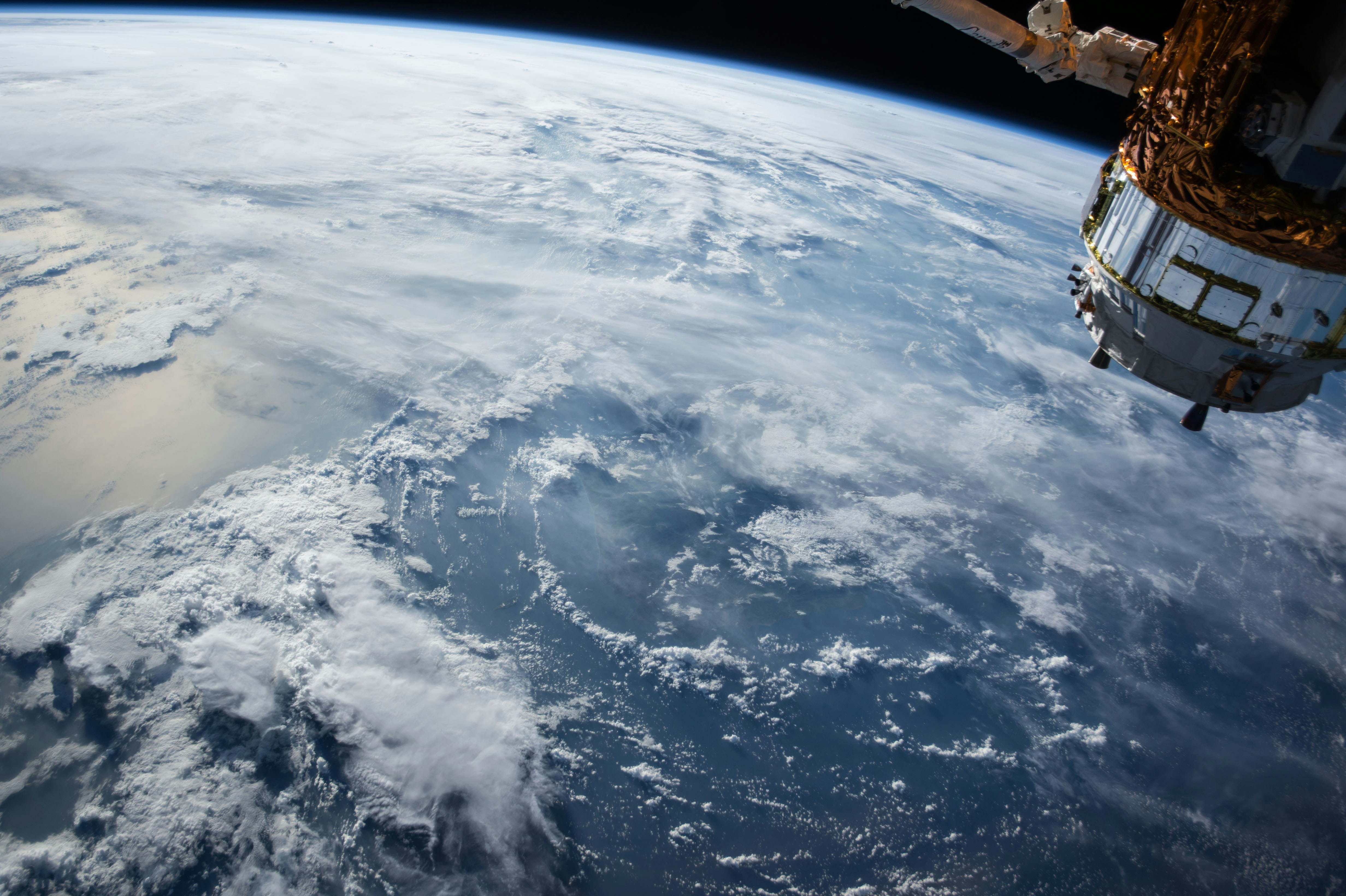
Layers of the Atmosphere – Structure and Features
The atmosphere is divided into different layers based on temperature variation and altitude. Each layer has unique characteristics and plays a specific role in supporting life on Earth.
1. Troposphere
- Lowest layer of the atmosphere
- Extends up to ~8 km (poles) and ~18 km (equator)
- Contains most of the air and water vapour
- All weather phenomena occur here
Key Point: Temperature decreases with height
2. Stratosphere
- Located above the troposphere (up to ~50 km)
- Contains the ozone layer
- Aircrafts fly in this layer due to stable conditions
Key Point: Temperature increases due to ozone absorption of UV rays
3. Mesosphere
- Extends up to ~80 km
- Meteors burn in this layer
Key Point: Coldest layer of the atmosphere
4. Thermosphere
- Extends up to ~400 km or more
- Contains ionosphere (important for radio communication)
- Auroras occur in this layer
Key Point: Temperature increases sharply
5. Exosphere
- Outermost layer of the atmosphere
- Merges into outer space
- Satellites orbit in this region
Key Point: Very thin air, almost vacuum
Exam Focus Summary
- Troposphere → Weather layer
- Stratosphere → Ozone layer
- Mesosphere → Meteor burning
- Thermosphere → Radio communication
- Exosphere → Satellite region
Quick Tip
Remember the order: T S M T E (Troposphere → Stratosphere → Mesosphere → Thermosphere → Exosphere)

Shaktimatha Learning
Geography | Atmosphere | Competitive Exams
Geography | Atmosphere | Competitive Exams


No comments:
Post a Comment